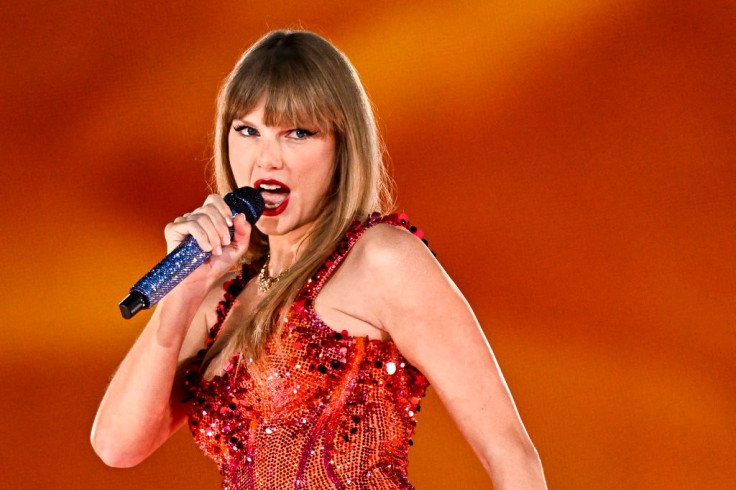
Pop superstar Taylor Swift is taking legal steps to protect her voice, image, and identity as concerns grow over artificial intelligence misuse in entertainment.
On April 24, Swift's company, TAS Rights Management, filed three trademark applications with the US Patent & Trademark Office. The filings include two sound trademarks for her voice catchphrases—"Hey, it's Taylor Swift" and "Hey, it's Taylor"—and one visual trademark tied to her stage image during the Eras Tour.
The visual filing describes Swift performing in a signature concert look: holding a pink guitar with a black strap, wearing a multicolored iridescent bodysuit with silver boots, and standing on a pink stage under purple lights.
According to records, the move is designed to help protect Swift's likeness as AI-generated content becomes more common online. Her image and voice have previously been used in unauthorized AI fakes, including manipulated photos and fake endorsements.
Swift has already spoken publicly about these concerns.
After discovering an AI-generated political endorsement falsely linked to her, she wrote on Instagram that it "conjured up my fears around AI" and highlighted the risks of misinformation, ENews reported. She added that the best way to fight false content is "with the truth."
Taylor Swift trademarks voice and likeness in apparent bid to stop AI deepfakes - https://t.co/bDEcygQDMS https://t.co/VXJK8C1dCQ
— patesalo (@patesalo_e) April 27, 2026
Taylor Swift Strategy Highlights AI Identity Risks
Legal experts say her strategy reflects a growing trend among celebrities trying to gain stronger control over their identities.
Intellectual-property attorney Josh Gerben explained that trademark law can be more powerful than traditional protections when dealing with AI content.
"Swift's trademark filings suggest a broader shift in how celebrities are applying trademark law to fight back against AI," Gerben wrote in an analysis.
He noted that AI tools can easily generate realistic voice and image replicas, making it harder for artists to protect their work using older legal methods alone.
The issue is not unique to Swift. According to Variety, actor Matthew McConaughey also filed multiple trademarks this year to protect his famous catchphrases and voice, including "Alright, Alright, Alright." His legal team has said the goal is to ensure consent is required before any use of his likeness.
Experts say this new approach could give celebrities stronger tools in court, especially as AI-generated content spreads faster across platforms. Unlike copyright laws, trademarks can block even "confusingly similar" uses of a person's identity.
© 2026 MusicTimes.com All rights reserved. Do not reproduce without permission.


