Every era has its arguments. In music, those arguments don't stay private for long. They spill into songs, interviews, fashion choices, tour routes, and eventually into how history remembers the artists involved.
The biggest beefs don't just entertain. They shook things up, made sides obvious, and sometimes left wounds that didn't go away.
Tupac Shakur vs. The Notorious B.I.G.: When a Scene Turned on Itself
The Tupac and Biggie situation spiraled fast. Tupac got shot at Quad Studios in '94 and didn't believe it was random. That suspicion stayed in the air. The music reflected it. Eventually, the rivalry stopped being about two artists and turned into East Coast versus West Coast. It became doctrine.
Death Row Records and Bad Boy Records weren't just labels. They were camps. Tupac leaned into confrontation, framing himself as both revolutionary and target. Biggie, often quieter publicly, became the symbol of New York dominance whether he wanted the role or not.
"Hit 'Em Up" pushed things past metaphor. Once names and families started showing up in the records, things changed. It stopped feeling like music. Then came the deaths. Tupac in Las Vegas in 1996. Biggie in Los Angeles the next year. Neither case was ever solved.
The genre never recovered its innocence, and it didn't try to. The industry learned that beefs carried real-world consequences, not just headlines.
50 Cent vs. Ja Rule: How Perception Becomes a Weapon
The feud between 50 Cent and Ja Rule didn't need a body count to be devastating. It ran on narrative. Who was real. Who was manufactured. Who controlled New York.
50 Cent understood timing and repetition better than anyone. By the time Ja Rule responded, the image had hardened. It didn't matter that Ja Rule still had hits or sharp moments on record. The culture had decided who won.
Years later, Ja Rule has admitted the feud fractured relationships and shut down creative possibilities across the city. That beef quietly rewrote the rules. Skill mattered. Strategy mattered more.
Drake vs. Kendrick Lamar: Beef at Internet Speed
Drake and Kendrick didn't circle each other for long once it started. When it broke in 2024, it was everywhere at once. It was rapid-fire, engineered for streaming, social media, and instant reaction.
Diss tracks landed like breaking news alerts. Kendrick's "Not Like Us" escaped the usual rap audience and became a cultural event. Drake countered aggressively, then escalated the situation beyond music, taking issue with his own label, Universal Music Group, over promotion and intent.
This wasn't radio-era beef. It was algorithmic warfare. Fans weren't waiting weeks to respond. They were posting receipts, remixing hooks, and choosing sides in real time. Kendrick's Los Angeles performance felt like a victory rally. The feud showed how streaming infrastructure turns rivalry into saturation.
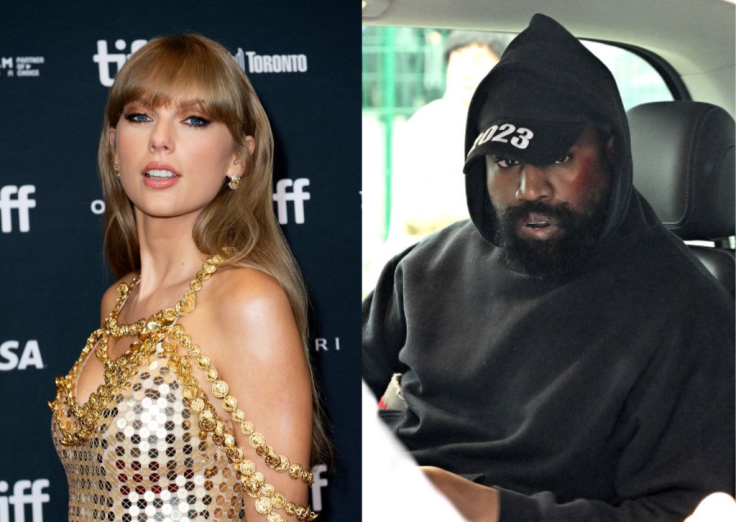
Taylor Swift vs. Kanye West: Control of the Story
The conflict between Taylor Swift and Kanye West never lived solely in music. It lived in perception. From the moment West interrupted Swift at the 2009 VMAs, the dispute became shorthand for imbalance, ego, and who gets to speak uninterrupted.
The release of "Famous" in 2016, followed by edited phone footage shared by Kim Kardashian, flipped the narrative overnight. Swift became the villain online. The backlash was relentless. Then time intervened. As West's public behavior and politics grew more extreme, earlier critiques landed differently.
This wasn't a lyrical battle. It was about narrative ownership, credibility, and the long memory of pop culture. Swift outlasted it. That alone reshaped how celebrity accountability is discussed.
Nicki Minaj vs. Cardi B: A Different Set of Rules
Nicki Minaj and Cardi B didn't just clash on records. It started with chart talk, spilled into interviews and collaborations, and ended with a physical incident during New York Fashion Week.
The coverage rarely centered on bars. It fixated on behavior, respectability, and optics. Both of them kept on being the top, selling artists, however, the feud was a trigger which reinforced the pattern that women in hip, hop are subjected to harsher scrutiny and given less space to compete fairly.
John Lennon vs. Paul McCartney: After the Band Breaks
After The Beatles broke up, John Lennon and Paul McCartney kept things quiet for a while. Then the tension came out in interviews and songs. Lennon's "How Do You Sleep?" and McCartney's "Too Many People" weren't called diss tracks, but everyone knew what they were about.
The bitterness did not go away fully before Lennon's murder in 1980.
Oasis vs. Blur: Britain Picks Sides
Oasis and Blur in the mid-1990s weren't just about music. People read them as representing class, city, and attitude.
Manchester grit versus London art school cool. The media framed it as sport, and the public played along.
The rhetoric got ugly. Remarks were made and later walked back. Still, the rivalry helped define Britpop's peak and turned chart positions into cultural statements.
Why These Feuds Last
The biggest beefs survive because they tap into real questions. Who's authentic. Who controls the narrative. Who gets to define the moment. Media turns those questions into spectacle, and artists decide whether to lean in or pull back.
Since the deaths of Tupac and Biggie, the industry has mostly shifted conflict away from physical danger and toward words, platforms, and perception. The fights are louder now, faster too. The impact remains the same.
Rivalries don't just decorate pop history. They shape it.
© 2026 MusicTimes.com All rights reserved. Do not reproduce without permission.


