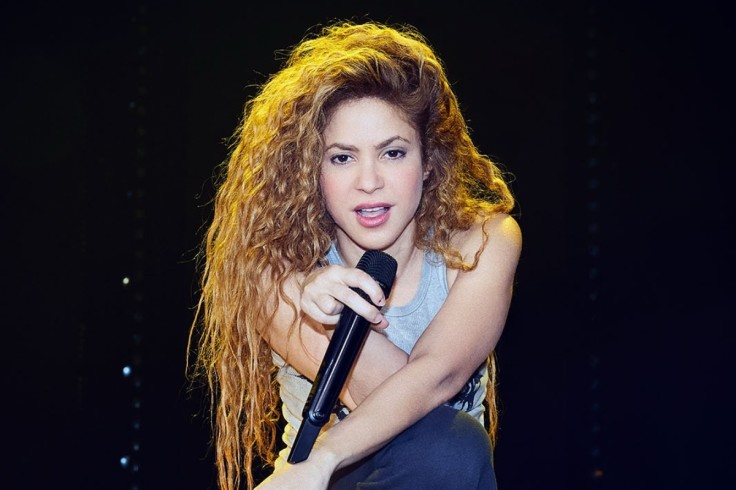
Shakira just scored one of those career milestones that feels both overdue and strangely controversial in 2026: a first-time nomination for the Rock and Roll Hall of Fame. The Hall announced its 2026 nominees on February 25, and Shakira appears on a ballot that also includes Mariah Carey, P!NK, Wu-Tang Clan, Lauryn Hill, Oasis, Sade, Phil Collins, Billy Idol, Iron Maiden, Joy Division/New Order, The Black Crowes, Jeff Buckley, INXS, Melissa Etheridge, Luther Vandross, and New Edition.
In one sense, Shakira's presence is perfectly in line with where the Rock Hall has been heading for years: "rock and roll" as a big tent idea, shaped by impact more than guitars. In another, it pokes an old bruise for Latin music fans, especially Latin American fans, because the Hall's performer roster still reflects surprisingly little of the Spanish language, Latin rock, or Latin pop that has dominated global stages for decades.
That tension is sharper because Maná, the legendary Mexican group, already ran this obstacle course. In 2025, Maná made history as the first Spanish language band nominated for induction, and then they did not make the final class when the Hall revealed the inductees. For many Latin music listeners, Maná's loss was a pattern: Latin influence gets celebrated in speeches and museum exhibits, but rarely rewarded with the Hall's highest honor.
So what does Shakira's nomination change? Potentially a lot, because she is one of the most globally recognizable Latin superstars of the past 25 years, and her catalog is built for a Rock Hall argument. Her crossover was never a simple language switch. She carried rock instincts into pop structures, then folded in Colombian and Caribbean rhythms, global dance sounds, and stadium sized hooks. The Hall's eligibility rule is 25 years after an artist's first commercial release, and Shakira has long cleared that bar.
Still, the bigger story is the math. Depending on how you count "Latino" in a U.S. institution that inducts both individuals and bands, the list of performers with clear Latin heritage remains short. At minimum, there are headliners like Santana (inducted in 1998), Ritchie Valens (2001), Linda Ronstadt (2014), and Joan Baez (2017). If you widen the lens to include influential Latino frontpeople inside multiethnic rock bands, Rage Against the Machine's induction in 2023 adds Zack de la Rocha to the conversation. Billboard noted during the Maná nomination cycle that only a small number of Latin artists, largely recording primarily in English, had been inducted, underscoring how rare Spanish first careers are in the Hall's performer category.
Shakira now arrives on a ballot that is, frankly, stacked and stylistically chaotic in the best way. There are pop institutions (Carey, P!NK), rock lifers (Idol, Maiden, The Black Crowes), alternative history pillars (Joy Division/New Order), and legacy soul and R&B royalty (Vandross, Sade), plus hip hop architects (Wu-Tang) and genre-blending auteurs (Hill). If the Hall is trying to describe the last half century of popular music with one list, this is what that looks like: unpredictable, intergenerational, and impossible to reduce to one radio format.
What happens next is part institution, part popularity contest. The Rock Hall's fan vote is open, and the official inductees are expected to be announced in April 2026, with the ceremony planned for fall. Shakira's fans are famously organized, and Maná's supporters showed last year that the campaign energy is real even when the outcome is not.
If Shakira gets in, it will not fix the representation gap overnight. But it would be a headline-making step toward a Hall that more honestly mirrors how the Americas, and the world, have actually listened for the last 30 years.
© 2026 MusicTimes.com All rights reserved. Do not reproduce without permission.


