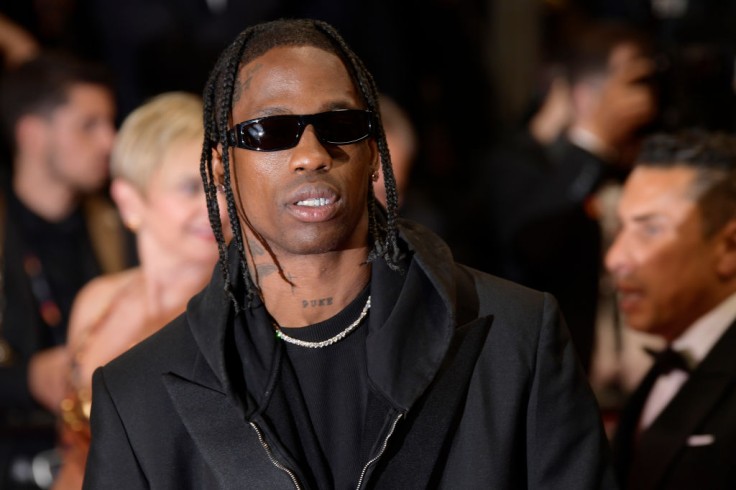
Rapper Travis Scott is urging the Supreme Court of the United States to step in and stop courts from using rap lyrics as evidence in criminal sentencing. The artist's legal team filed an amicus brief supporting a Texas death row inmate whose lyrics were cited during his trial.
The case centers on James Garfield Broadnax, a Black man convicted in 2009 for the killing of two men during a robbery near Garland, Texas the year before.
Broadnax was sentenced to death by a nearly all-white jury after prosecutors removed all potential Black jurors from the panel. During the sentencing phase, prosecutors introduced dozens of pages of Broadnax's handwritten rap lyrics to argue that he could be dangerous in the future.
According to reports, jurors asked to review about 40 pages of those lyrics twice while they were deciding whether to impose the death penalty.
Broadnax's lawyers recently asked the Supreme Court to halt his execution, which is scheduled for next month, and review the case.
Scott's legal filing argues that the use of rap lyrics in court violates constitutional protections.
According to Complex, the brief states that prosecutors told jurors Broadnax was likely to be dangerous simply because he performed "gangster rap."
"The prosecutors argued Mr. Broadnax was likely to be dangerous in the future simply because he engaged in 'gangster rap,'" the brief said. "Such an argument functionally operates as a categorical and straightforwardly unconstitutional content-based penalty on rap music as a form of expression."
Travis Scott, Killer Mike, and others have filed briefs with the Supreme Court in support of a Texas man whose rap lyrics were used in his conviction.https://t.co/KcxqMjJOXa
— Rolling Stone (@RollingStone) March 9, 2026
Travis Scott Urges SCOTUS to Protect Rap Lyrics
Scott's lawyers also warned that taking rap lyrics out of context creates a bigger problem for the entire genre.
"At a certain level of abstraction, the reality is even more problematic: taking rap music out of context subjects the entire genre to prosecution," the filing stated.
The brief adds that rap music, which is "primarily created by and historically associated with minority artists," is protected by the First Amendment. Scott's team asked the Supreme Court to clarify the legal limits on using "protected artistic expression as evidence of criminal propensity."
In a statement, attorney Ellyde R. Thompson said the case raises serious constitutional concerns.
"A death sentence should never be based in any part on constitutionally protected artistic expression," Thompson said.
Scott is not the only artist speaking out. Another amicus brief supporting Broadnax was filed by several hip-hop figures, including Killer Mike, T.I., Young Thug, Fat Joe and N.O.R.E., along with music scholars and arts organizations, RollingStone said.
Their filing argues that rap lyrics are often fictional storytelling rather than personal confessions. The brief said exaggerated themes of violence or crime are common in the genre and are part of its creative style.
"This case exemplifies the racial prejudice that infects a criminal proceeding when the State uses a defendant's rap lyrics to capitalize on anti-rap bias," the filing said.
© 2026 MusicTimes.com All rights reserved. Do not reproduce without permission.


