Music has always been good at slipping past the places where speeches stall out. Long before social media or streaming metrics, bands figured out how to turn songs into signals, ways for people to recognize themselves and each other. Over time, a few of those bands didn't just reflect social change. They helped set it in motion.
From the 1960s to the present, the shape of that influence has shifted with technology and culture, but the impulse stays the same.
Eight moments make that especially clear.
1960s
The Beatles didn't start as revolutionaries. They started as a pop band with sharp instincts and better hooks than anyone else in their orbit. But by the middle of the 1960s, their popularity had scrambled the social order. Teenagers were suddenly driving taste and money, and adults didn't quite know what to do with that.
As the band moved from mop-top singles to studio experimentation, they became shorthand for a broader loosening of rules. Hair got longer. Authority felt less fixed. "All You Need Is Love," broadcast to millions in 1967, landed as a kind of cultural permission slip. You didn't have to agree with everything they did to feel the shift they represented.
1960s-1970s
Around the same time, folk and soul artists were less subtle. Bob Dylan's early protest songs gave movements a language they could carry into the streets. Joan Baez didn't just sing about justice. She was there for it, she was the face at the events, and she dared to perform at rallies and marches when the threat to her life was still very real.
Local heroes and famous figures like the Staple Singers helped the movement transition from church to radio, packaging the messages of the civil rights movement in gospel songs that not only could be played in church, but also in the cars of everyday people. Their approach wasn't abstract. It was practical. If people were going to listen, the music had to move.
1970s-1980s
Bob Marley took that idea global. Reggae had always carried political weight, but Marley turned it into a worldwide force. His songs tied Rastafarian belief, anti-colonial struggle and Pan-African identity into something portable. "Get Up, Stand Up" and "Redemption Song" didn't belong to one country for long.
When Marley performed at Zimbabwe's independence celebration in 1980, it wasn't symbolism. It was participation. His music didn't observe liberation movements from a distance. It stood with them.
1970s-1980s
Punk came along with fewer illusions. In Britain, it emerged from economic collapse and youth unemployment, and it sounded like it. The Sex Pistols voiced anger without offering much in the way of solutions. That was the point. The Clash pushed further, tying punk's energy to anti-racist organizing and left-wing politics.
Rock Against Racism concerts in the late 1970s showed what that could look like in practice. Music became a gathering point, not just a statement. Punk's refusal to behave itself turned into a refusal to stay quiet.
1990s-2000s
By the 1990s, Rage Against the Machine made politics inseparable from their sound. Their lyrics named names. Corporate power, U.S. foreign policy, state violence, nothing was abstract. The band backed that stance with money, organizing and visible alliances with activist groups.
They didn't treat activism as branding. It was the foundation. That clarity made them unavoidable, even to people who disagreed.
1990s-Present
Hip-hop has carried protest from the beginning, but Kendrick Lamar reframed it for a different era. His music doesn't shout. It diagnoses. Songs like "Alright" spoke directly to survival under pressure, which is why they echoed through Black Lives Matter protests without being written for them.
Kendrick's music also became popular in schools and local places, a very clear indication that hip-hop is still a very powerful tool that can be used for educating as well as entertaining.
2000s-Present
Quite differently, Beyoncé's power is not like that. She doesn't sidestep power. She uses it in plain sight. Projects like "Lemonade" and "Formation" connected Black history, feminism and Southern identity to mainstream success, without softening the message.
Her impact goes beyond music. Voter engagement campaigns, bail fund support and sustained advocacy turned visibility into leverage. In the streaming era, scale matters, and she knows how to wield it.
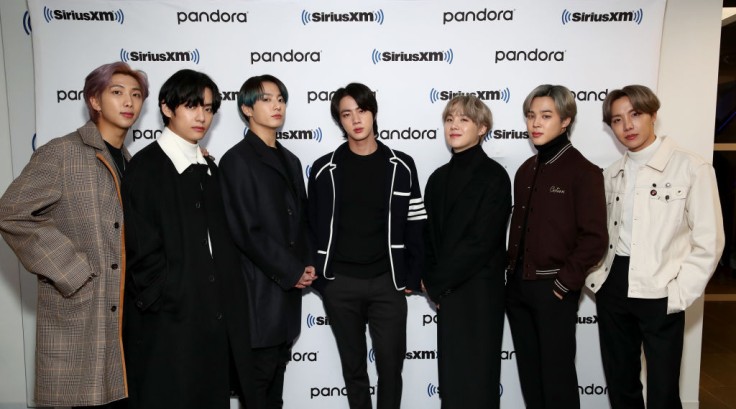
Then there's K-pop, where the shift isn't just artistic. It's organizational. When BTS gave $1 million to Black Lives Matter in 2020 and their fans also donated the same amount within a day, it was a clear indication that the support system which was the fandom had become the very foundation.
Fandoms of K-pop in Asia, the U.S. and the rest of the world have been very efficient in mobilizing funds, providing support to protests and spreading political messages as compared to the older organizations that are still trying to figure out their way. Social media turned devotion into logistics. BTS speaking at the United Nations in 2018 wasn't a novelty. It was recognition of that reach.
The details change with every generation. Vinyl gives way to streaming. Flyers turn into hashtags. But the pattern holds. Music offers shared language when institutions fail to speak. It creates memory, momentum and belonging.
© 2026 MusicTimes.com All rights reserved. Do not reproduce without permission.


