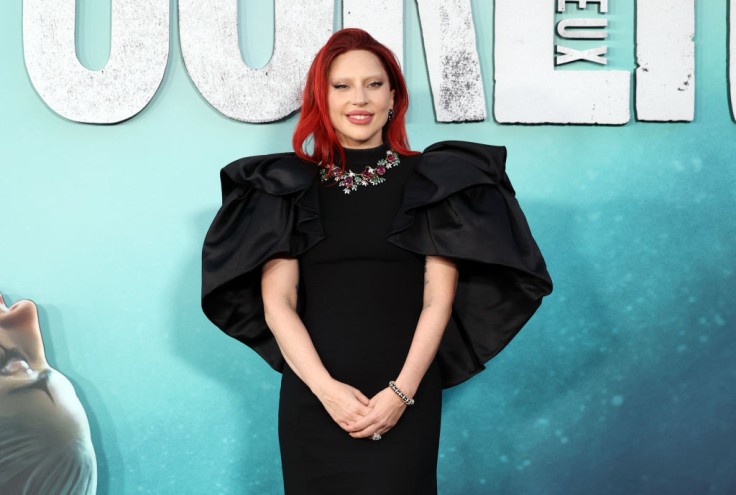
The line between music and fashion didn't blur overnight. It collapsed slowly, then all at once. What used to be a red-carpet sideshow is now one of the main engines driving how people dress, shop and think about style. By 2025, musicians aren't just wearing the clothes. They're shaping the systems behind them.
This didn't happen because pop stars suddenly cared about tailoring. Fashion needed new energy, and musicians were already fluent in image, storytelling and mass culture. The artists who understood that earliest didn't wait for permission.
Lady Gaga: Fashion as Performance and Provocation
When Lady Gaga arrived in the late 2000s, fashion stopped behaving itself. She treated clothes as performance, not polish. The 2010 VMA meat dress is often remembered for its absurdity, but it made something clear in the moment. Fashion could be confrontational and theatrical, and it could carry politics without asking permission.
Over time, Gaga's relationship with fashion matured without softening. She moved between extreme concepts and classic silhouettes, often within the same awards season. Her collaborations ranged from major heritage houses to younger designers who suddenly found themselves on a global stage. The impact wasn't any single look. It was the message that musicians could engage fashion as serious creative partners, not decorative muses.
Kanye West: Building the System, Not Just the Look
Kanye West didn't treat fashion like a sideshow. He treated it like a system. At its peak, Yeezy's partnership with Adidas forced the industry to rethink what a celebrity brand could actually be. These weren't tour souvenirs or vanity projects. They were collections built around a clear point of view.
Muted palettes, utilitarian silhouettes and streetwear treated with runway seriousness filtered quickly into the mainstream. Just as important was the mindset shift. West made it normal for hip-hop artists to speak openly about design, fabrics and process. Even as his business ventures fractured, the influence held. Streetwear didn't fade. It became a foundation.
Rihanna: Redefining Luxury Through Inclusion
Rihanna didn't step into fashion quietly. Fenty's launch under LVMH in 2019 made it clear this wasn't a vanity play. It questioned long-held assumptions about who luxury serves and who gets to run the room.
Her broader impact arguably came through Savage x Fenty, which treated diversity not as marketing language but as baseline reality. Models of different sizes, genders and backgrounds weren't featured as statements. They were simply present. The industry eventually followed, less out of goodwill than necessity. Rihanna proved that inclusion wasn't a risk. It was viable business.
Pharrell Williams: Translating Sound Into Design
Pharrell Williams has always moved easily between creative worlds. His appointment as men's creative director at Louis Vuitton in 2023 formalized what fashion insiders already knew. He understands how culture moves.
His collections leaned into color, global references and tactile detail without trying to posture as inaccessible luxury. The work felt lived-in rather than distant. That approach signaled a larger change in how fashion houses evaluate leadership. Cultural fluency now carries as much weight as formal design training.
Tyler, The Creator: Taking the Long Way
Tyler, The Creator didn't break into fashion all at once. His credibility built gradually, piece by piece. What began as artist merchandise grew into Golf le Fleur, a label that treats collections with the same care as albums. His shows are controlled. His collaborations feel intentional.
He attends fashion weeks, studies design history and approaches clothing as craft. The industry responded accordingly. Tyler didn't shortcut credibility. He built it slowly, then used it to move the needle.
Billie Eilish: Choosing When to Be Seen
Billie Eilish didn't dress for pop approval. Oversized fits and awkward proportions gave her distance from the usual expectations. It was about control, not shock.
When her style shifted later on, people noticed because the change felt personal. Fans followed the movement, not the uniform.
Bad Bunny: Making Culture Non-Negotiable
Bad Bunny treats fashion as a cultural bridge. His work brings Puerto Rican identity into global fashion without sanding it down.
The Adidas collaborations captured trends, but the bigger impact was visibility. He showed that regional style isn't a niche. It's part of the main conversation.
A$AP Rocky: Total Integration Across Industries
A$AP Rocky represents full immersion. Long respected in fashion circles, he cemented that role when he became Ray-Ban's first creative director. Through his AWGE collective, he operates across music, runway, styling and product design.
He moves fluidly between street-level influence and high fashion, managing multiple categories without diluting his perspective. Few artists have bridged that gap as cleanly.
Why Musicians Now Drive Fashion
The biggest change is how trends move. Designers once dictated, editors filtered and consumers followed. Musicians now skip the middle steps. A tour wardrobe, a music video or a social post can shift demand overnight.
© 2026 MusicTimes.com All rights reserved. Do not reproduce without permission.


