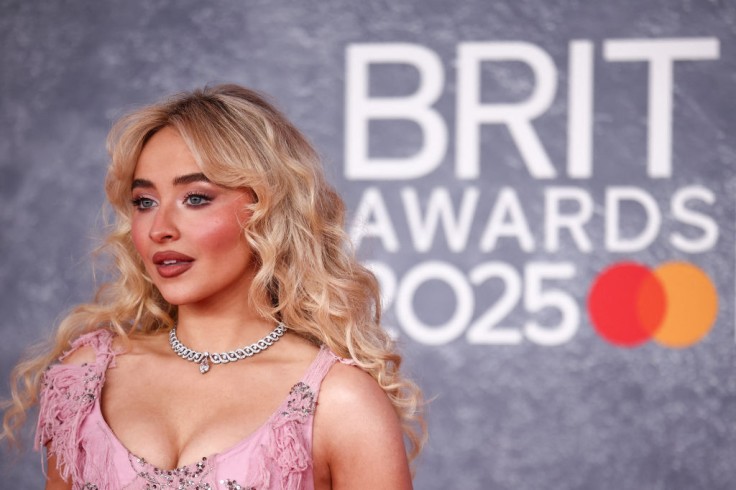
Sabrina Carpenter's jump from Disney regular to pop provocateur plays out as much in tabloid firestorms as on the charts.
Each dust-up has nudged her further from "safe" teen fare into something sharper, more divisive. At 26, she's built a career where scandal isn't a bug, it's the feature.
The Triangle That Started It All
Back in early 2021, Olivia Rodrigo's "drivers license" exploded, and fans zeroed in on the "blonde girl" line. They pegged Sabrina as the culprit after spotting her with Joshua Bassett, Olivia's "High School Musical: The Musical: The Series" co-star and rumored ex. What could've stayed gossip turned ugly fast. Online mobs hit Sabrina with death threats and slut-shaming, recasting the former "Girl Meets World" kid as pop's new villain.
She fired back with "Skin" that same January. The lyric "maybe blonde was the only rhyme" read like a direct shot, and stan wars lit up X. Sabrina never confirmed the details, but the single shifted her lane. No more bubblegum neutrality. She stepped into the mess, turning real-time drama into her first real pop flex. It set a pattern: don't deny, don't apologize, just write the rebuttal.
The fallout lingered. Fans dissected every Instagram story, every sighting. For months, Sabrina was the internet's bad guy in a teen heartbreak soap opera. But that noise? It stuck around, boosting streams and embedding her in Gen Z's collective memory.
Flipping the Script With 'Because I Liked a Boy'
Fast-forward to 2022 and emails i can't send. The standout "because i liked a boy" was her full reckoning. Co-written with JP Saxe and Julia Michaels, it lays bare the harassment: homewrecker labels, threats, the whole circus. The video amps it up, with Sabrina as a literal freak-show act, feathers and spotlights mocking how fans gawked.
No vague metaphors. She sings about getting dragged for simply liking a guy, no matter the timeline. Critics tied it straight to the Bassett saga, though all parties stayed mum on specifics. What hit different was the weariness in her voice, the dark laugh at her own expense. This wasn't victimhood. It was "you made me the monster, so here's what that feels like."
The track pulled her into confessional pop territory, echoing Taylor Swift's diary dumps or Olivia's own veiled shots. By release, it had racked up millions of views, and talk shifted from "who did what" to fandom toxicity. Sabrina didn't just survive the dogpile. She turned it into a hit that still charts in fan playlists three years later. That pivot stuck. Controversy became clay.
'Nonsense' Outros and the Raunchy Live Shift
As albums like Short n' Sweet dropped, Sabrina's stage game took over. "Nonsense" started as a cheeky single, but the real magic was those improvised outros. City by city, she'd riff filthy punchlines: Boston got baseball innuendo, London something cheekier. TikTok compilations blew up, fans trading "best outro" clips like trading cards.
Not everyone laughed. Clips hit feeds, and critics piped up. Too explicit for the preteens still showing up from her Disney days? Choreo around "Juno" and "Feather" leaned heavy on hip pops and knowing smirks. TV panels questioned if her crowd skewed too young for the banter.
Sabrina pushed back in interviews. It's a generational thing, she said. Older gatekeepers shrug at male rappers' sex talk but clutch pearls when a woman does it. Her point landed. Those outros became her signature, proof she'd outgrown kid gloves. Tours sold out. The edge drew in older fans, while loyalists grew up with her. Live shows stopped being just promotion. They were the new battleground.
'Man's Best Friend' and the Cover That Broke the Internet
June 2025 brought the flashpoint. Man's Best Friend album art dropped: Sabrina on all fours in a slinky black dress, hair yanked back by an off-frame hand. Leash vibes, clear as day. It was built to provoke.
#SabrinaCarpenter responds to claims that “Man’s Best Friend” cover is degrading to women:
— Variety (@Variety) December 3, 2025
"It meant one thing to me and 100 things to other people, and I was looking at it going, ‘That’s valid. Mine’s valid. What’s for dinner?’” she says with a shrug. “Not to bypass the weight… pic.twitter.com/2eqI4P4R1X
Cue the split. A Scottish women's group called it regressive, trafficking in abuse tropes and women-as-pets imagery. Fans fractured too, some crying male-gaze pandering, others reading kink satire or power-play metaphor. Social feeds boiled: anti-feminist sellout or bold agency?
Mainstream picked it up quick. Some defending her right to own the image, others seeing old-school sexism. Sabrina leaned in during promo. "Submission is both dominant and submissive," Sabrina explained, tying it to album themes of heartbreak, control and desire. Hypocrisy from boomers who devoured MTV vixens? She named it.
Her team softened with alternates, one nodding to a Marilyn Monroe pap shot. But the original stuck in culture memory. Streams spiked. Think pieces framed it as peak Gen Z pop: visuals that dare you to argue.
Controversy as Career Engine
Look at the arc. Triangle villain in '21 becomes "because i liked a boy" survivor by '22. Stage provocateur by '24, album-cover warrior in '25. Each hit reframes the last, pushing her sound from peppy Disney holdovers to sleek, sex-positive bangers.
It's not accident. Carpenter metabolizes the heat, folding fan wars and op-eds into lyrics and looks. Disney's a distant memory now. She's the artist who expects discourse, who bets on split reactions to fill arenas and playlists.
At year's end, "Man's Best Friend" still sparks bar talks. That's her bet paying off. Pop evolves messy. For Sabrina, mess is the evolution.
© 2026 MusicTimes.com All rights reserved. Do not reproduce without permission.


