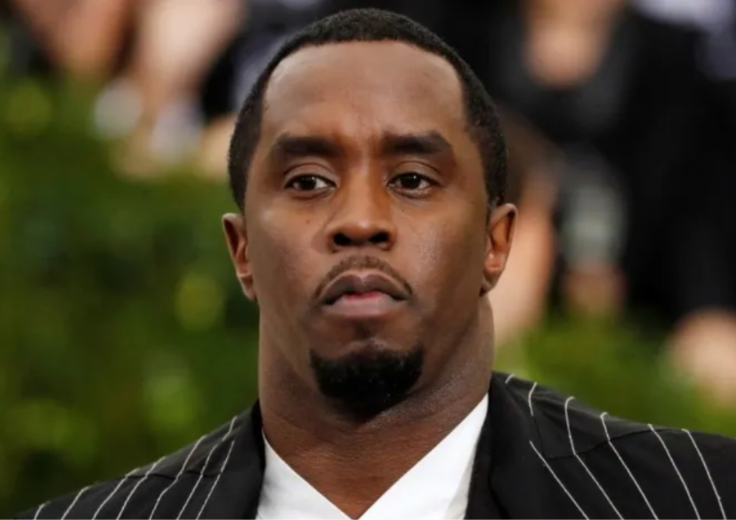
A group of well-known legal scholars is backing Sean "Diddy" Combs in his ongoing appeal. They asked a federal appeals court to throw out his sentence and hold a new sentencing hearing. The filing says that a judge wrongly used claims that a jury found to be false to lengthen Combs' prison sentence.
AllHipHop says that the support comes from Professor Douglas A. Berman of The Ohio State University, Professor John Blume of Cornell Law School, and retired U.S. District Judge John Gleeson, who is now an adjunct professor at New York University School of Law. The professors sent a brief to the U.S. Court of Appeals for the Second Circuit saying that the sentencing court went too far by treating acquitted claims as fact.
The professors' filing stressed how important jury verdicts are in the federal justice system. They wrote, "Sean Combs chose to trust a federal jury to decide whether the sovereign got it right. The verdicts largely vindicated his faith in our jury system."
Inside Edition reported that the professors said that jurors acquitted Combs of the most serious charges but convicted him on two counts under the Mann Act, which usually carries shorter sentences. The brief says that even though those people were found not guilty, the judge used false claims to justify a longer sentence.
The professors discussed the recent changes to federal sentencing policy. They used a quote from the chair of the U.S. Sentencing Commission to talk about those changes. The quote was about a rule change in 2024: "Not guilty means not guilty"
They also said that prosecutors wanted punishment for claims they couldn't prove in court. In response to that worry, the professors wrote, "Federal prosecutors wished to see Mr. Combs punished for the charges they had failed to prove." They also said, "The district court did so, resolving core factual disputes contrary to the verdicts."
The filing said that these kinds of actions hurt people's faith in the justice system. The professors said, "Acquittals, in these cases, become inconsequential formalities with no meaningful effect on the state's ability to punish."
They also said it was a constitutional issue related to the power of the jury. They wrote, "Only a jury, acting on proof beyond a reasonable doubt, may take a person's liberty," to make that point clear.
The professors don't want Combs to be let go right away. Instead, they want a new sentencing hearing that doesn't use acquitted conduct as a basis. The brief says, "Interpreting the sentencing rules to allow acquitted conduct to drive the sentence would drain the jury trial promise of real meaning."
The Second Circuit has not yet said when it will rule on Combs' appeal. The filing puts more pressure on the court by making the case a bigger test of whether jury verdicts still matter in federal sentencing.
© 2026 MusicTimes.com All rights reserved. Do not reproduce without permission.


